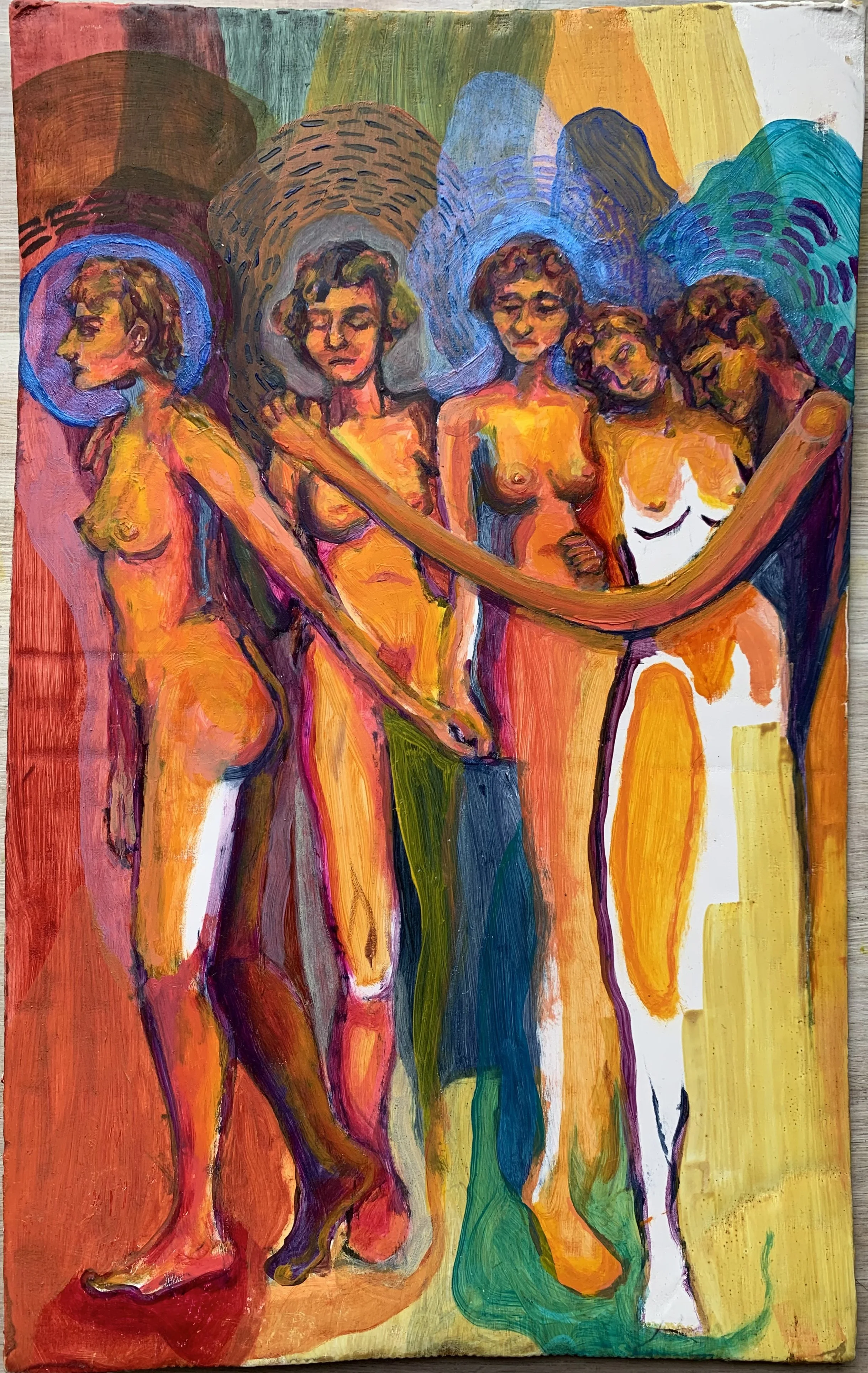
Touch/untouch
The early pandemic turned my relationship with my body into something it had never been before. I had loved my body and fiercely hated it, but never before had I felt so separate from it. It felt like an object I must tend to or a needy child pulling my sleeve. I did not want to have to service it; it was bitter maintenance,
While most of my feelings were about simply having a body, this period also brought back anxieties around weight, size, sexuality, and sex itself that had been dormant, supposedly solved, for years. Sometimes I felt like I’d had a decade taken from me and I was back in my 14 year old brain and this body was foreign to me. Not only foreign, but this body often felt bad, wracked by constant nausea and back pain and craving any and all physical touch.
This series of paintings was born in the first nine months of the Pandemic, long before I knew how long term the effects of the period would last for me. It was a time of intense research and intense disassociation, as much of the writing below shows, but it allowed me to explore my feelings about my body, cravings, fantasies, and grief. All the works were painted on roughly cut cardboard panels giving them inconsistent dimensions that approximate 7”X15”
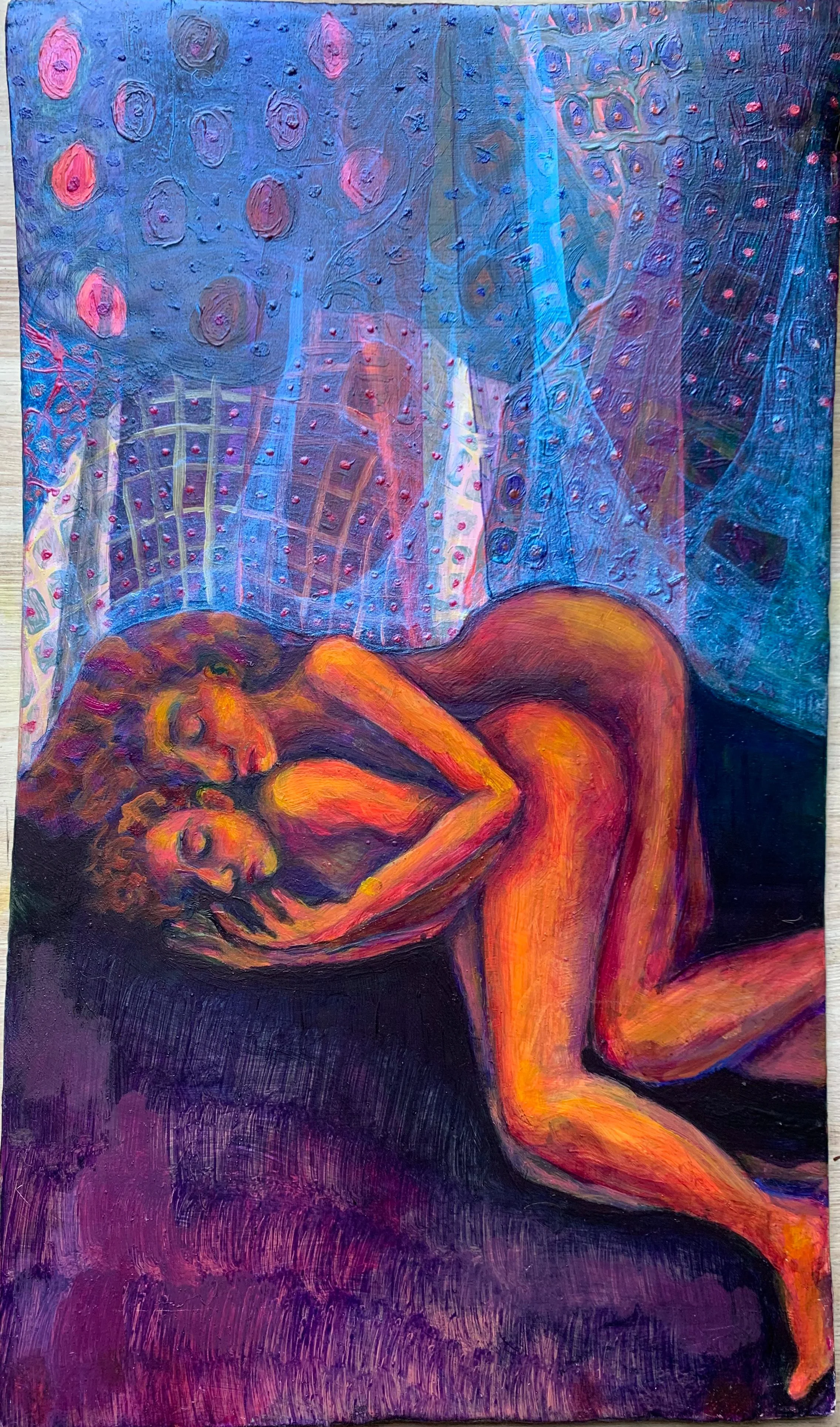
In My Dreams, You Cling to Me, 2020 Oil and interference pigment on cardboard
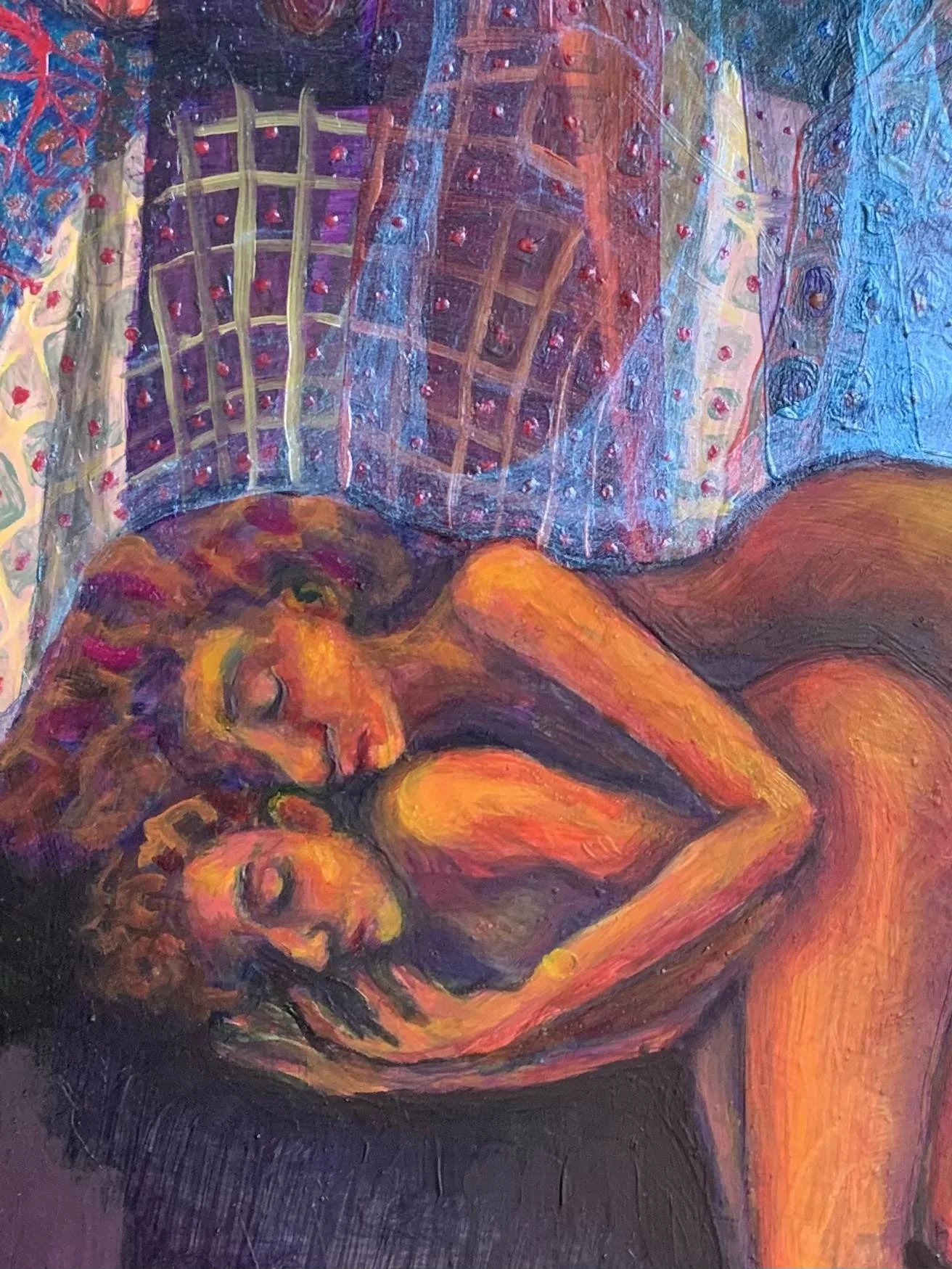
In My Dreams, You Cling to Me, detail
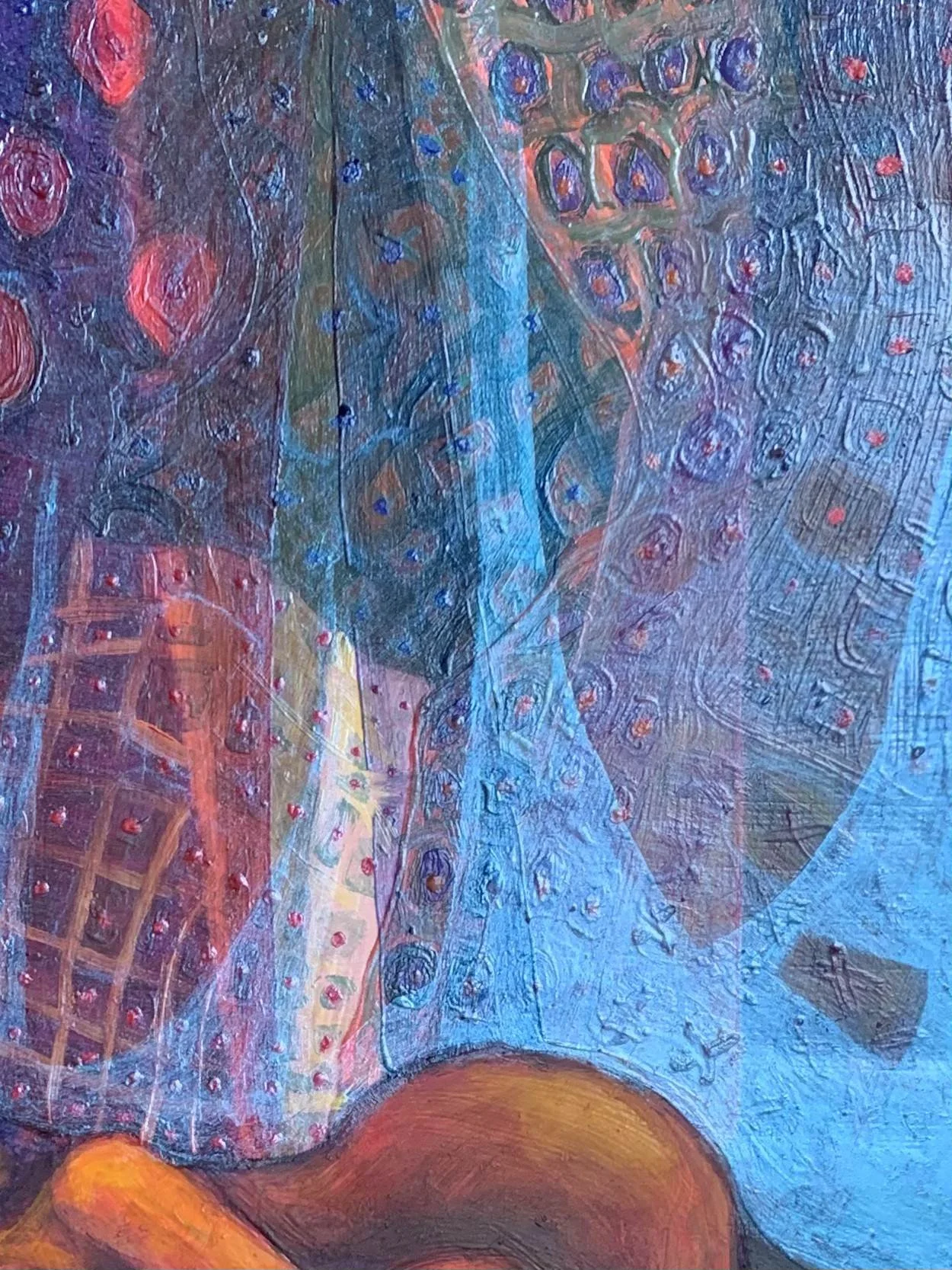
In My Dreams, You Cling to Me, detail
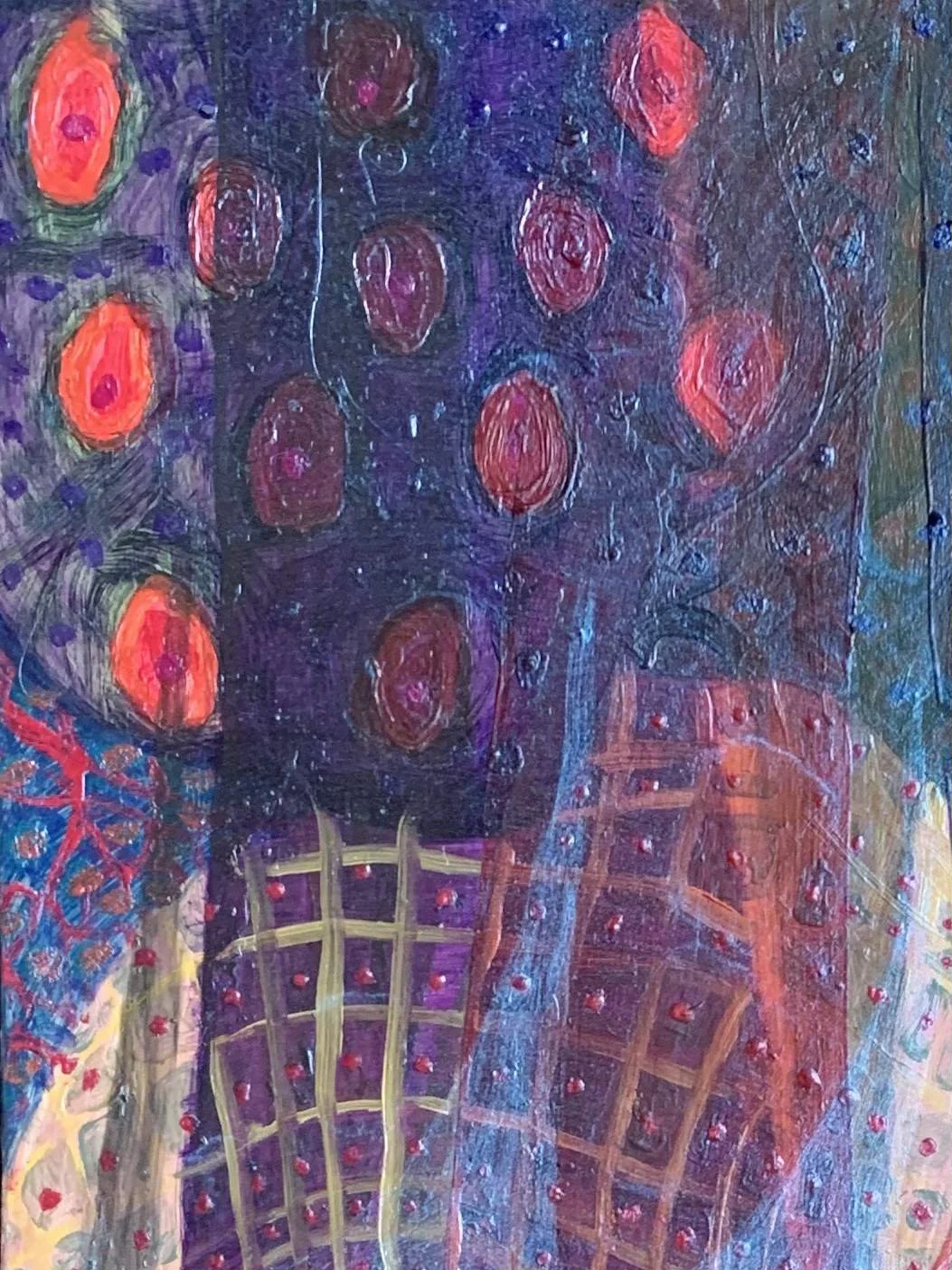
In My Dreams, You Cling to Me, detail
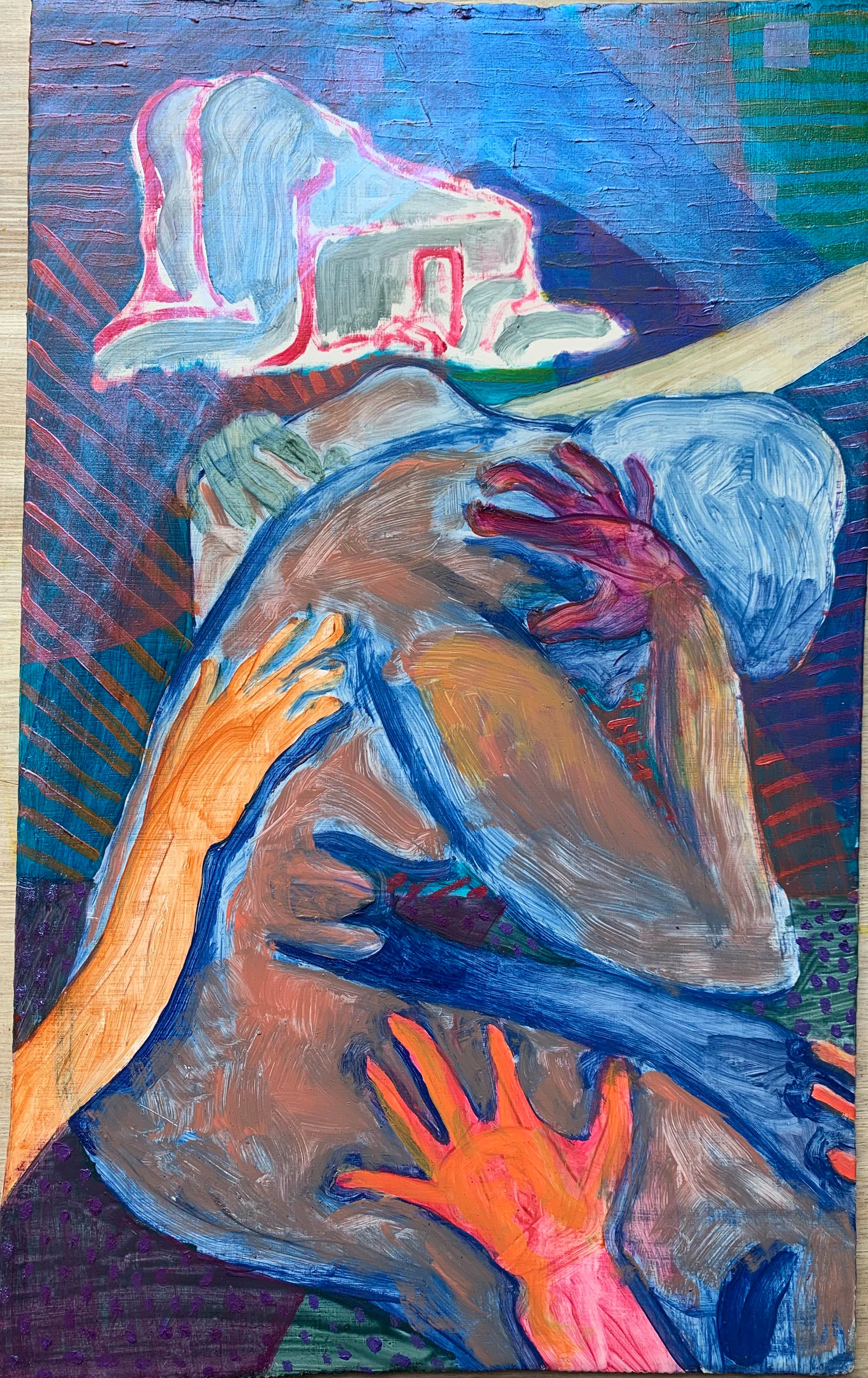
Touch/Untouch, 2020 Oil and interference pigment on cardboard
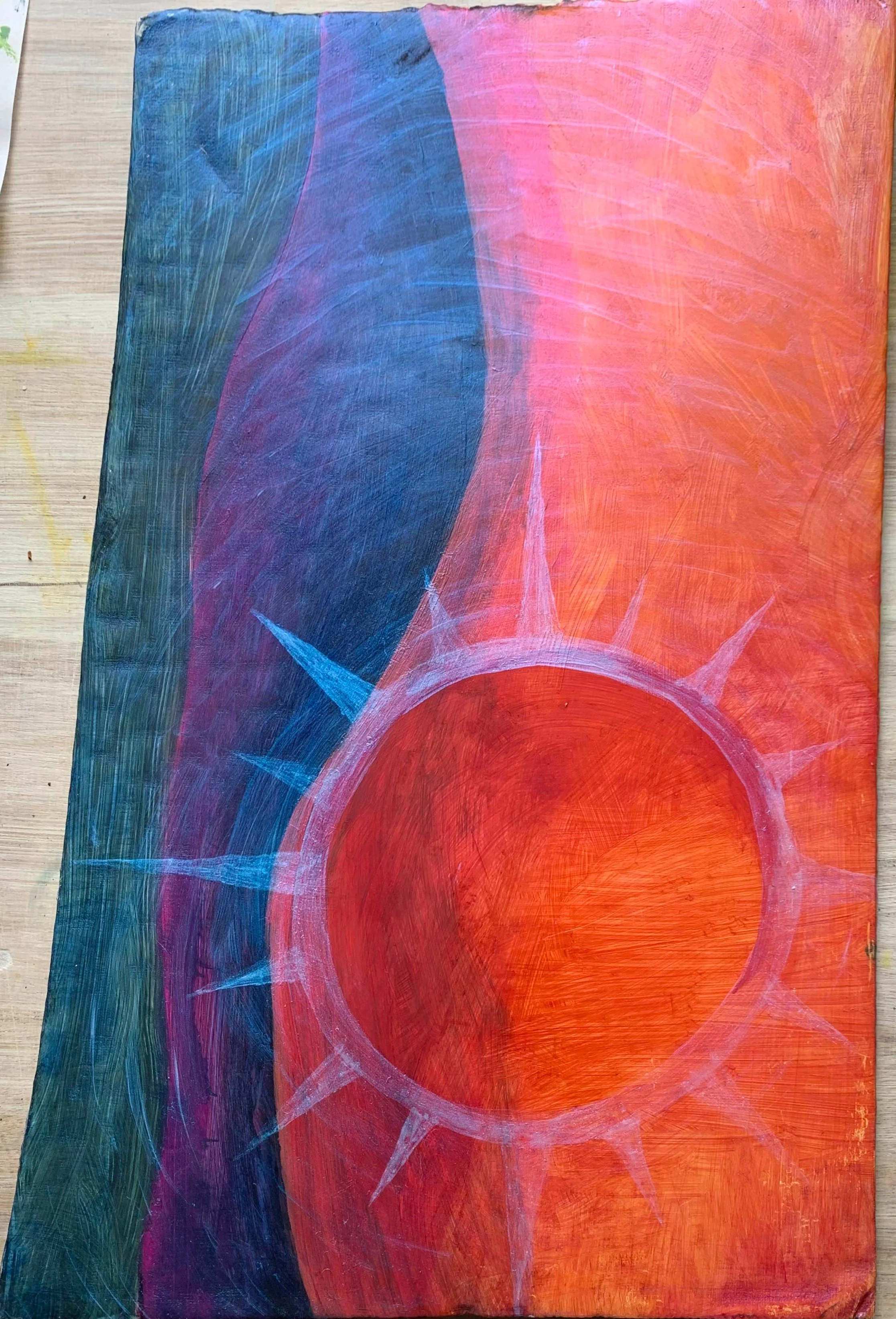
Do You Feel My Gravity/I Will Absorb You, 2020 Oil and interference pigment on cardboard
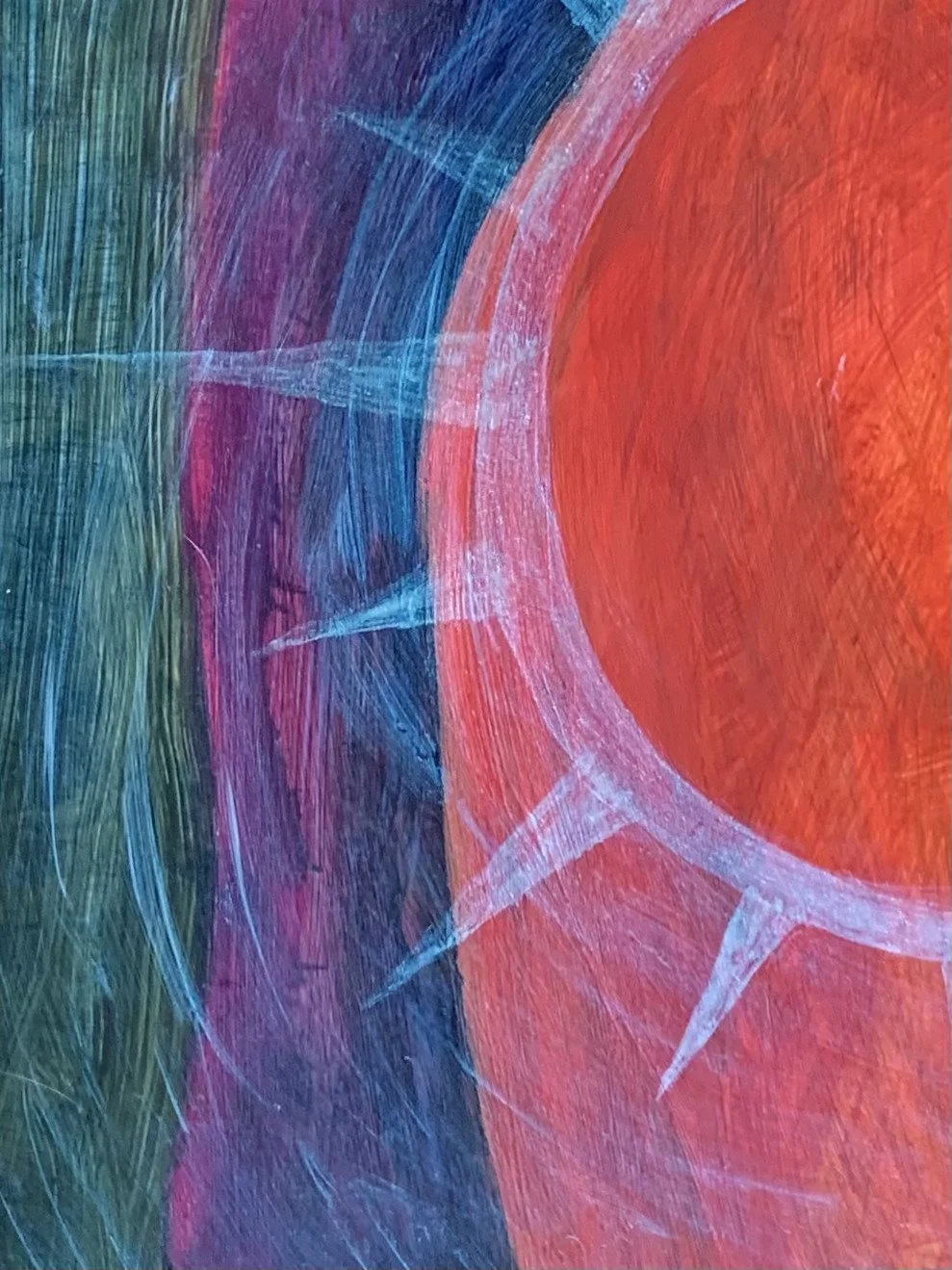
Do You Feel My Gravity/I Will Absorb You, detail
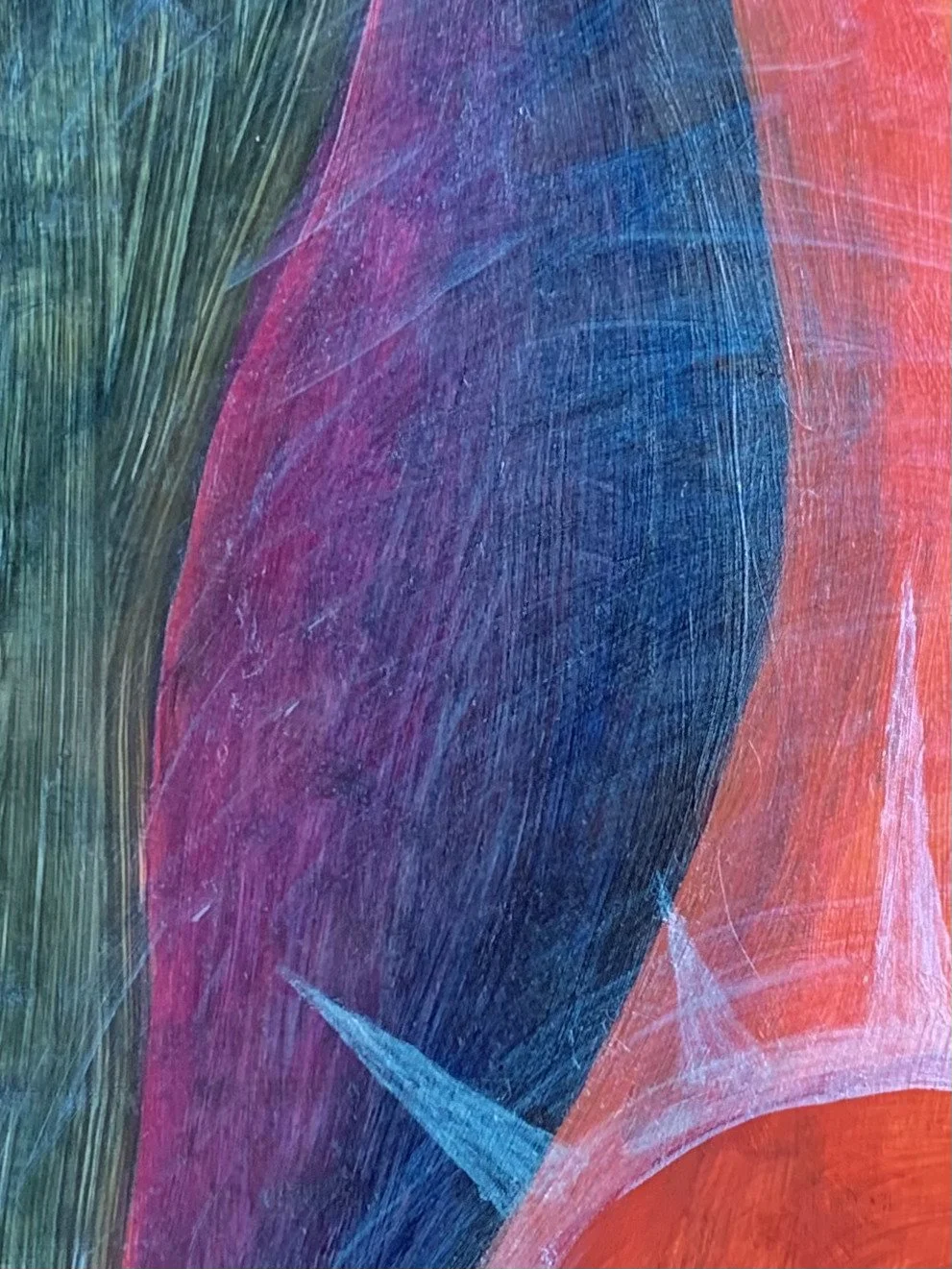
Do You Feel My Gravity/I Will Absorb You, detail
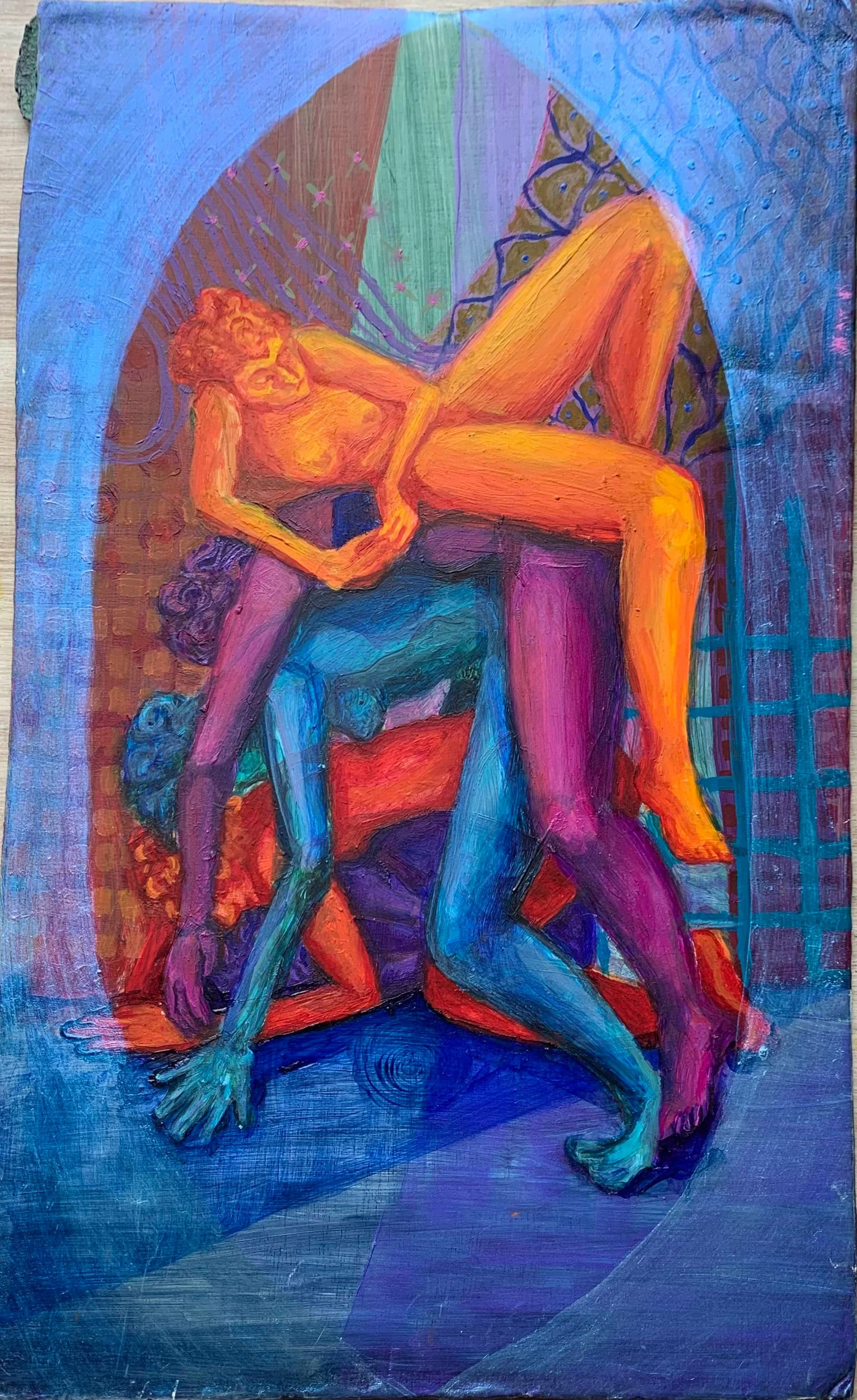
I Go, I Go, I Go, I Go, 2020 Oil and interference pigment on cardboard
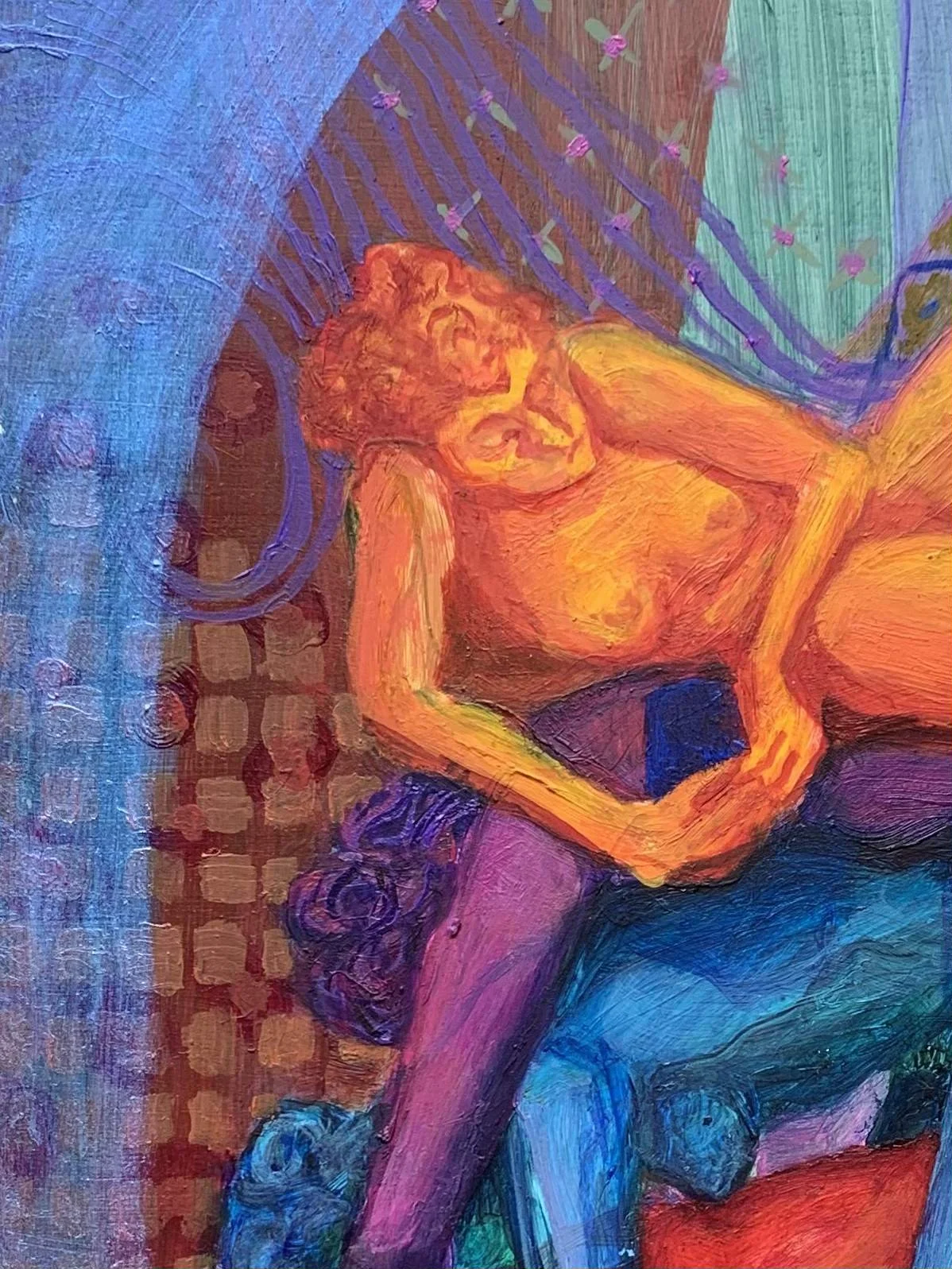
I Go, I Go, I Go, I Go, detail
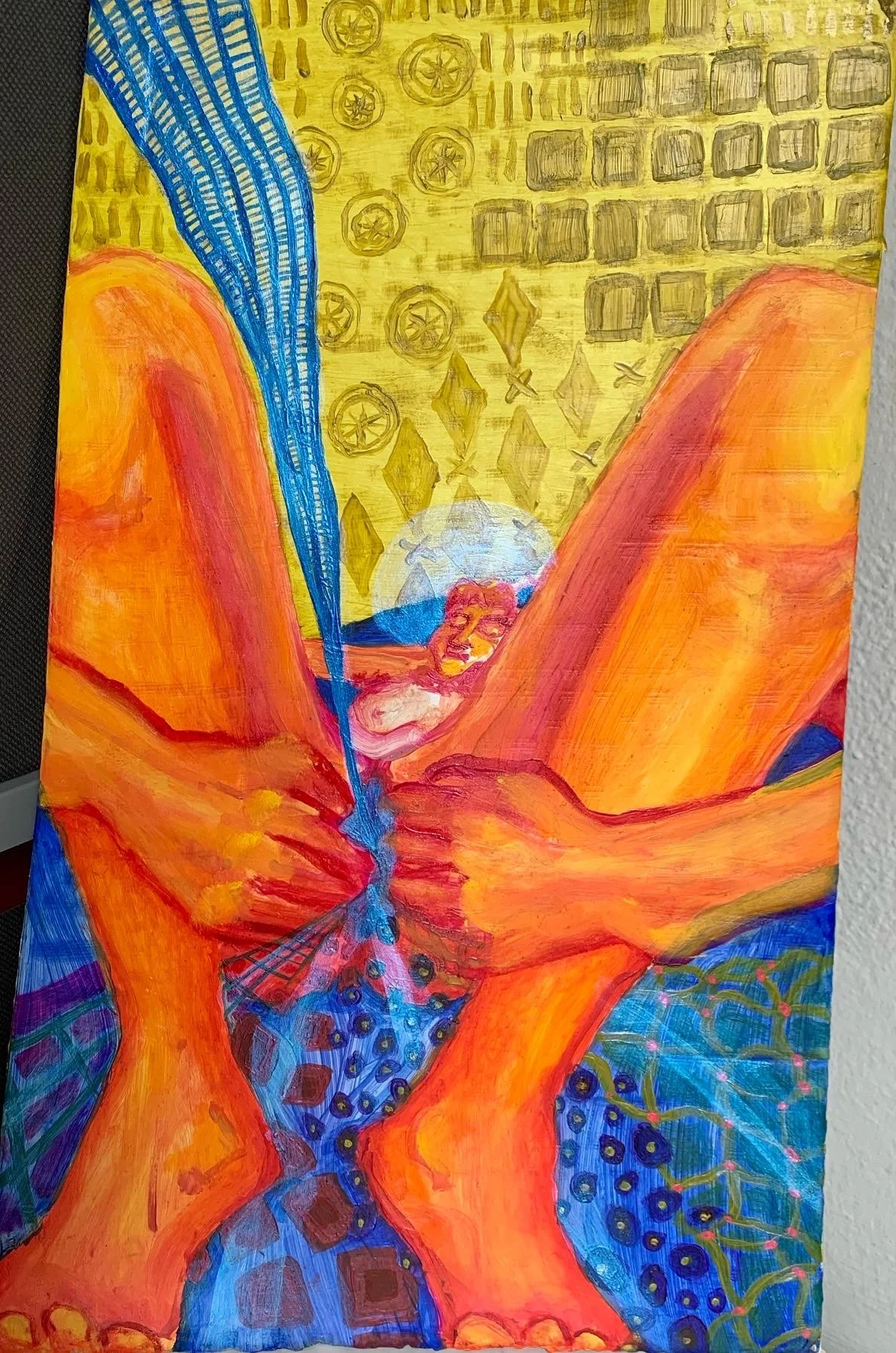
Out of Touch Comes -, 2020 Oil and interference pigment on cardboard
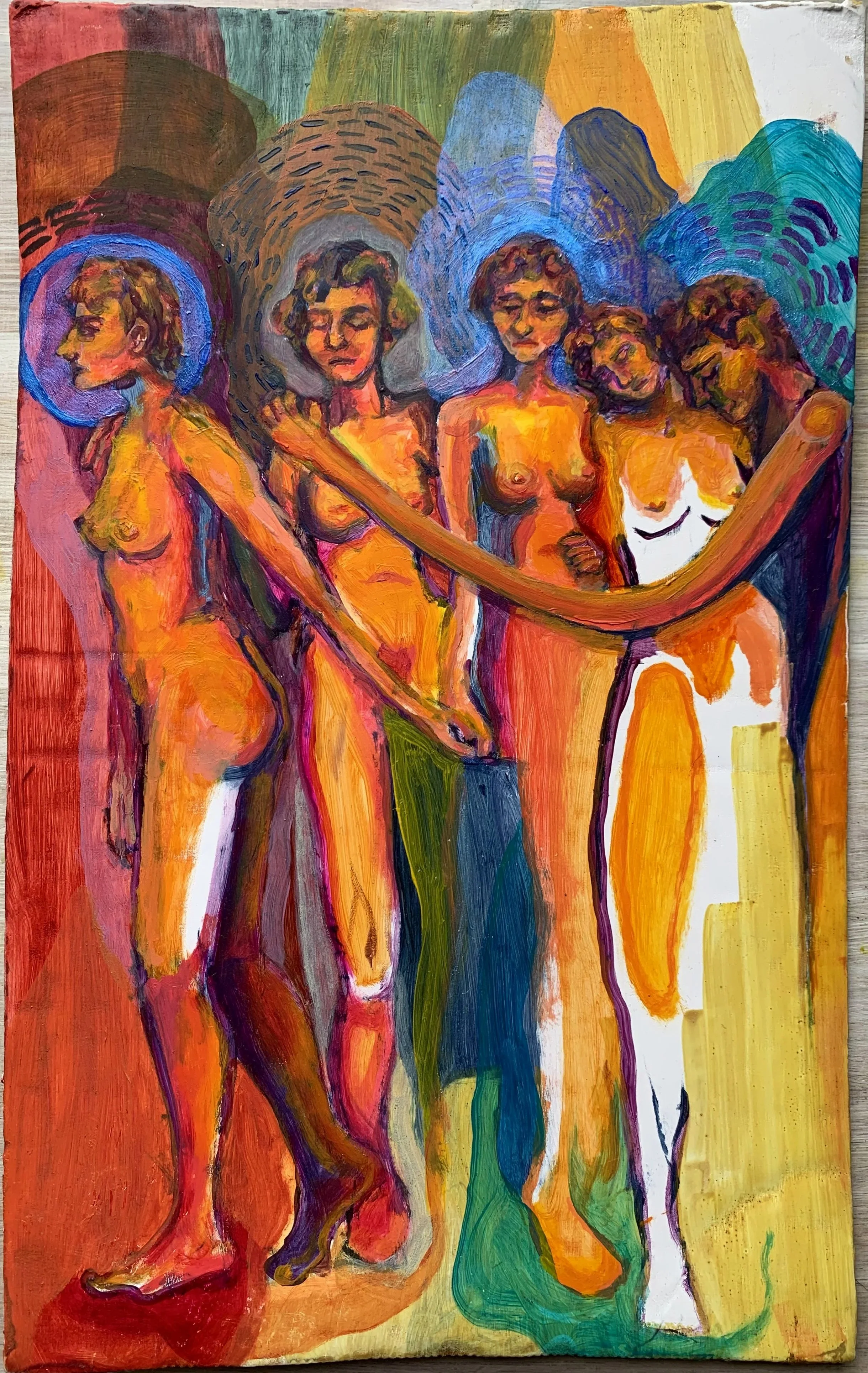
I Hold Myself Closer, 2020 Oil and interference pigment on cardboard
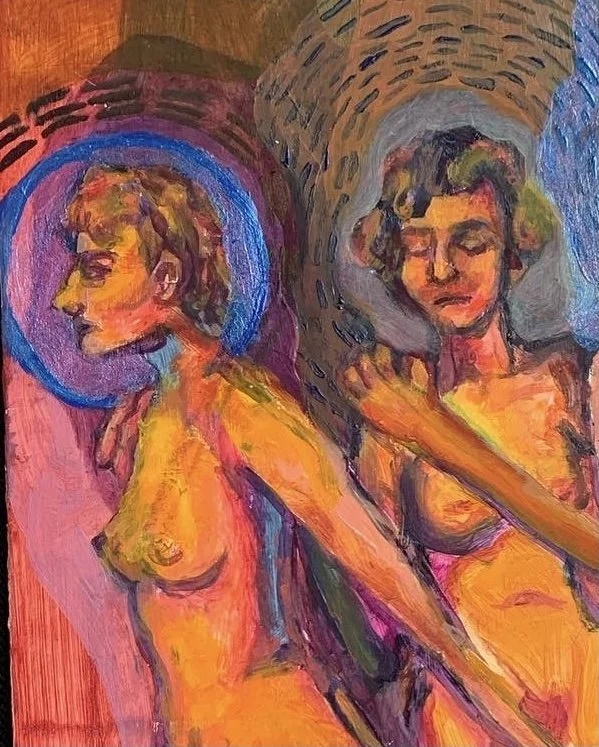
I Hold Myself Closer, detail
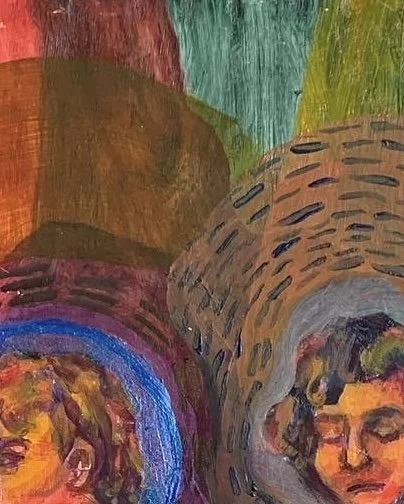
I Hold Myself Closer, detail
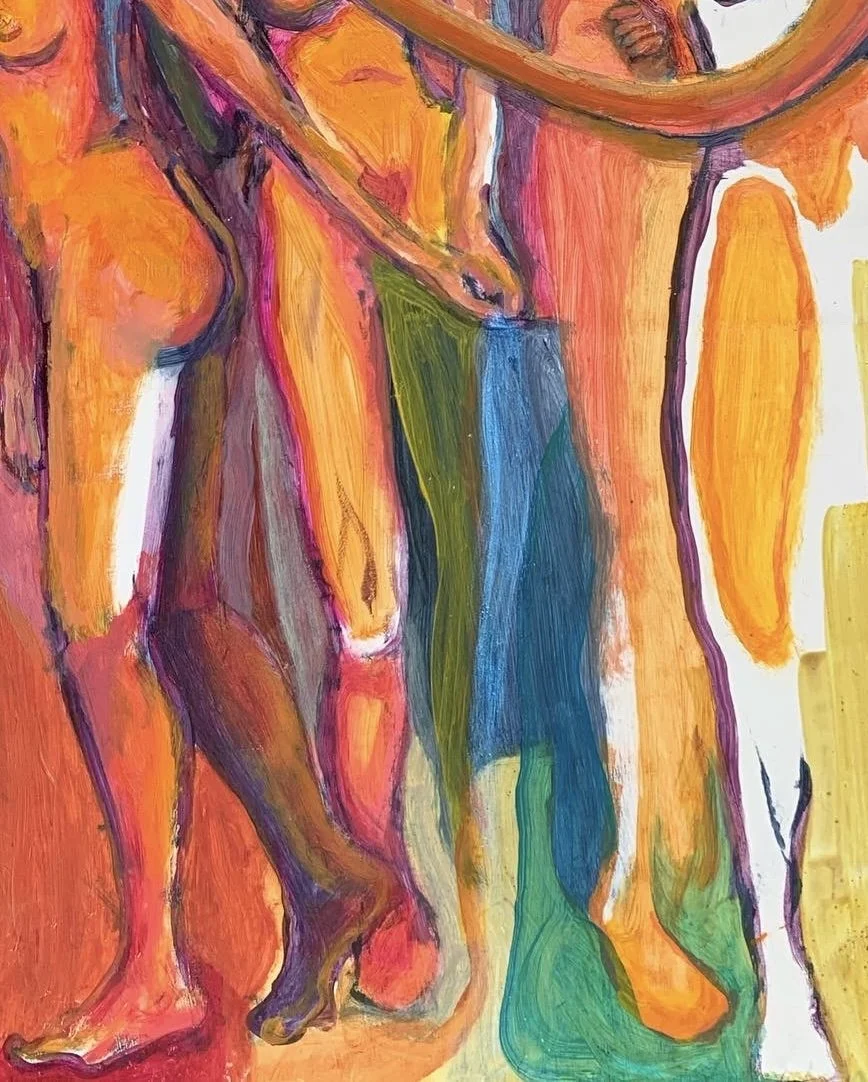
I Hold Myself Closer, detail
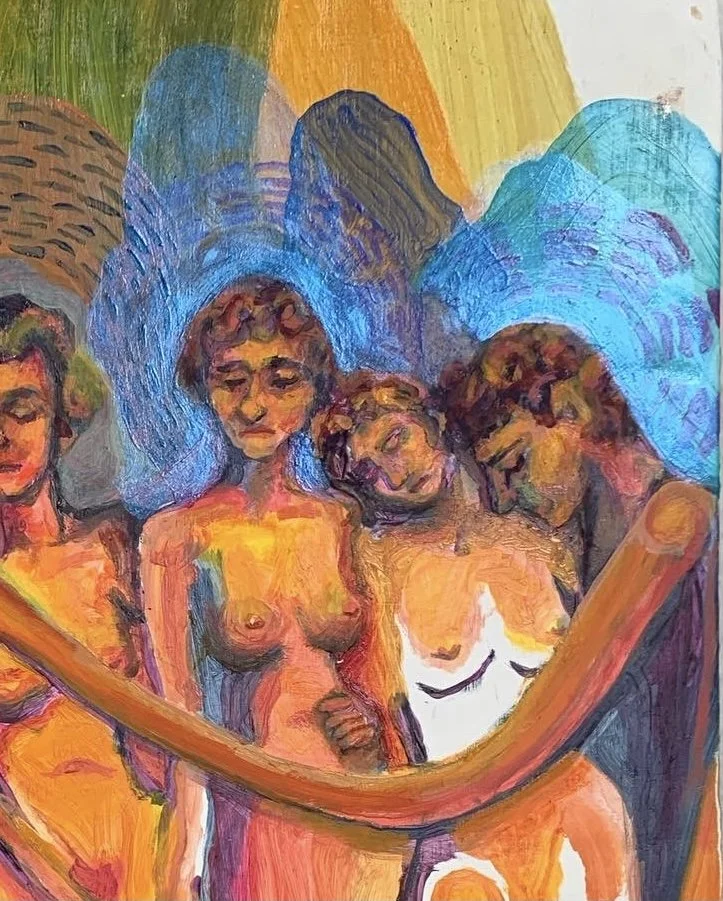
I Hold Myself Closer, detail
Related Writing
the body aches, wants
pressure, a push, a snap.
it wants a small, unconscious gasp
and pull in the middle of the night.
grief sits in the pelvis, straining against
tight sinew and the gap
left by summer. it claws at the spine,
one sharp twist of the root and
the back becomes a mountain range.
the body is bent,
twisted into additional limbs,
fresh arms supporting stacks of dread.
grief is a central weight and
the body is tired, exhausted by waiting,
desperate and hungry. a knot
pushes the sacrum out, inward, elsewhere;
punishment for allowing fear to turn to fury.
the body speaks the dead language of desire,
unlearned through surrender and lost
in an exchange for Realistic Expectations.
An Exercise
you begin, a ball, tight and solid.
you unroll your wrists, left first, then right,
fingers unfurl one at a time.
flex, bend, release.
next, open your elbows,
stretching, pushing against the bounds of your reach.
fists
then pushing
then fists
then pushing then fists then
a breath.
you press your palms into the floor the bed the ground
your gravity.
you press your palms and push your breath up
open
for a moment.
then you fall into your hips,
settling into their hollow.
knees come down gently
i’m obsessed with the image of my body
i want everyone to see it, no
i want everyone to look at it
know it
i want it to be hidden or simply cease to exist
it’s an image that’s haunted me
lied to me, scratched
into countless books
the idea of my body, uncomplicated
next to many and foreign, alone
the comparison is what’s deadly
i imagine my body seared
into the backs of eyelids, sculpted in clay,
labeled Sublime or at least superior
i imagine my body owned by someone else
it’s an image i wish to distribute, to hand out
to strangers and the secretly admired
this is only surpassed by my wish to have it taken
Mandorlas (meaning “almond” in Italian) often appear in religious art, usually surrounding Christ or the Virgin. sometimes thought to be a vestige of pagan symbols (representing the vagina and birth), the mandorla has deeper origins as the vesicus piscus which predates Christianity and Buddhism (named after a fish bladder of similar shape). The vesicus piscus is a symbol of occupying two worlds, in religious art, the earthly and the heavenly. Imagine a venn diagram; the mandorla is the in between shape. These mandorlas usually surround Christ or the Virgin, usually darkest at the center to show that as holiness increases, only increasing darkness can depict their true luminance. Sometimes this darkness is shown as concentric bands of color, sometimes they are rays of darkness emanating outward instead of light. In Byzantine and Medieval art, the mandorla indicates glory beyond the earthly plane and is usually depicted as a blue or golden aura. Gold was used to avoid reference to a specific time or place, creating a dematerialized and ethereal unreality. Blue was indicative of celestial glory, and ultramarine itself was considered a holy pigment (partly due to its cost). The mandorla can encompass other opposites as well and has been used in sacred geometry, architecture, music, and astrology.
In my Touch/Untouch paintings, I used blue mandorlas (and halos) to indicate portals between the earthly plane and others (or figures who can travel between them). I am not particularly interested in heavenly planes so much as internal ones, ones that exist as memories or fantasies. Instead of gold or ultramarine, I chose to use interference blue as it exists as a fairly ethereal partition to me, and used it in various densities instead of darkening. Some, such as in I Go, I Go, I Go, I Go, are inverted mandorlas, which I hope give the sensation of entering this in between plane.
heavy and dark
you coat my bones like honey
driving me down
sticky and sweet
into the earth
lifted as if by strings
i pound my fists
scraping my knuckles bare
torn and bloodied
who cares
who needs to bend
i pound my fists into my spine
built to hold me up
crushed and knotted
until you pry it apart
i pound my fists into my pussy
a betrayal
an ache so greedy
i’d have to dig to find
easier to simply
beat it to the surface
i pound my fists into my feet
carefully calloused in promises
to take me out of here
each foot stripped of its strength
unable to take me to you
my fists flow with honey
bathing me in a sweet elixir
peppered with blood and soil